The Influence of Fixture Congestion on Rollover Requirements and Cashback Mechanisms in Domestic Wagering Environments
Written by Logan Lang · Jun 23, 2026
The Influence of Fixture Congestion on Rollover Requirements and Cashback Mechanisms in Domestic Wagering Environments
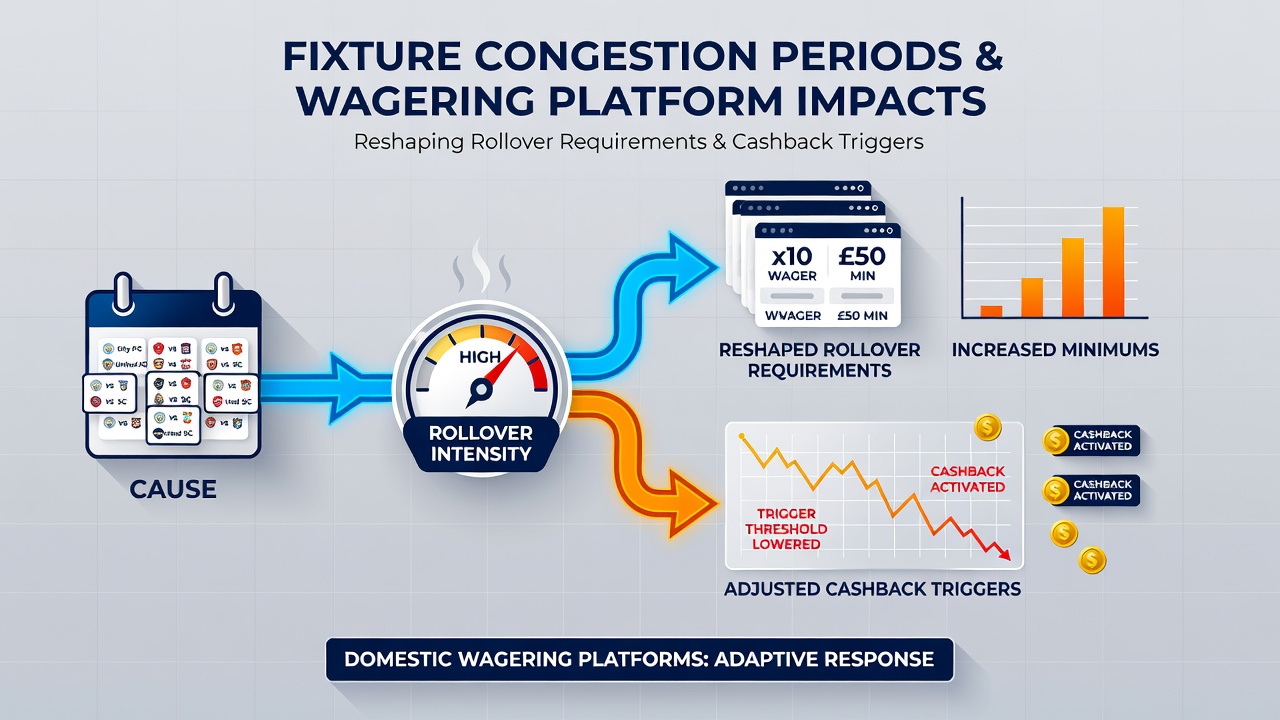
Fixture congestion emerges when domestic leagues and cup competitions schedule multiple matches within short timeframes, and operators on local wagering platforms respond by modifying bonus conditions such as rollover multipliers and cashback activation thresholds. These adjustments occur because elevated betting volumes during packed calendars create new patterns in user activity that platforms track through internal data systems.
Core Drivers Behind Schedule Density
Leagues across Europe and South America often compress fixtures around winter months or international windows, yet observers note similar clusters appear in June 2026 when club tournaments overlap with national league finales. Platforms monitor these intervals because bettors place more wagers per week, and systems automatically recalibrate promotional parameters to maintain balanced risk exposure across user accounts.
Regulatory filings from bodies such as the Canadian Gaming Association show that transaction spikes during dense schedules reach 30 to 40 percent above baseline levels, prompting operators to revise the number of times a bonus must circulate before withdrawal eligibility.
Rollover Requirement Modifications
During periods of fixture overload, many domestic sites raise standard rollover ratios from 5x to 8x or higher on deposit bonuses, while some extend the timeframe allowed to meet the target. The change stems from observed increases in average stake sizes, which platforms offset by requiring additional turnover to protect against accelerated bonus depletion.
One documented case involved a mid-tier operator that shifted its Premier League-related welcome offer rollover from six times to nine times for the month of December, citing higher match frequency as the direct cause. Users who completed the requirement early in the period still received payouts, yet the platform recorded fewer successful clearances overall because the higher threshold filtered out smaller-volume accounts.
Cashback Trigger Adjustments
Cashback offers typically activate after a set loss threshold, yet congestion periods frequently see these triggers raised from 10 percent to 15 or 20 percent of net losses. Platforms implement the shift because daily loss figures grow larger when bettors engage multiple times per day across simultaneous fixtures, and operators seek to cap total payout liabilities.
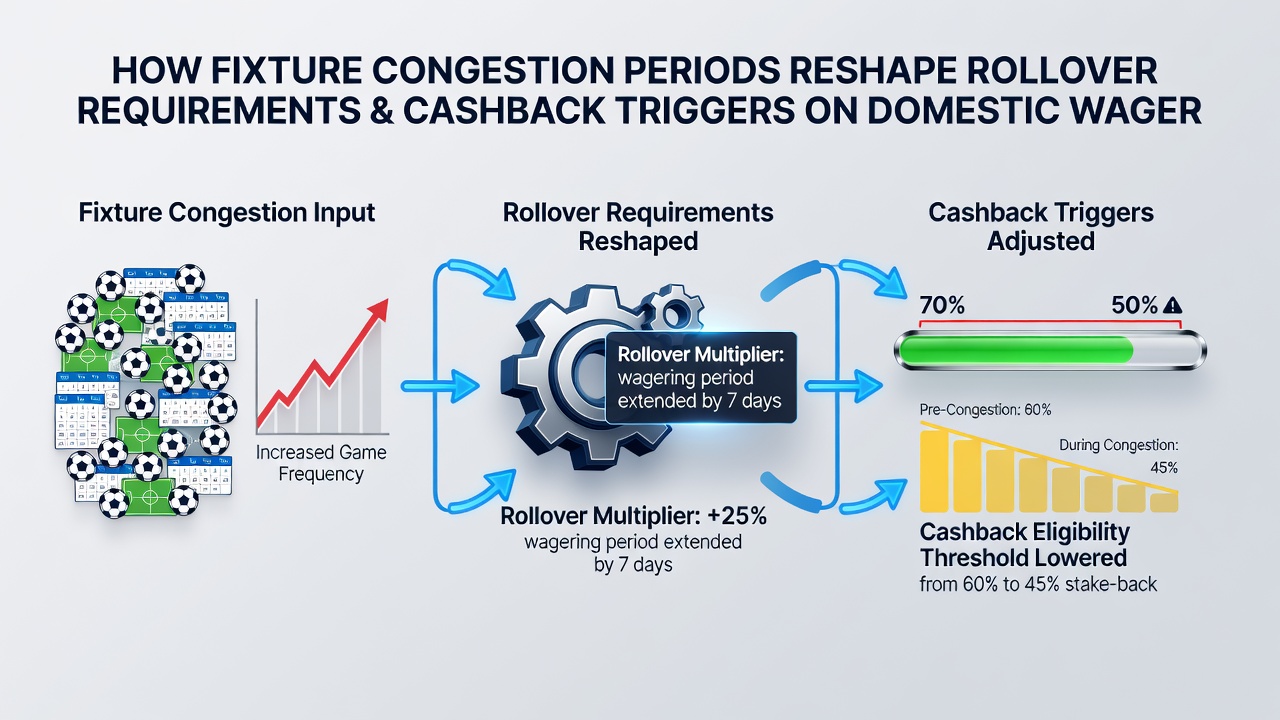
Research published by the International Gaming Institute at the University of Nevada indicates that loss-based rewards processed during high-density schedules increase in volume by roughly 25 percent compared with standard weeks. Consequently, several platforms delay cashback crediting until the following Monday rather than processing it daily, which spreads liability while still honoring the original promotional promise.
Platform-Specific Responses Across Regions
European operators tend to publish revised terms 48 hours before a known congestion block begins, whereas Australian and Canadian sites often apply changes retroactively based on real-time volume metrics. Both approaches appear in public terms-and-conditions updates, and users who review the notices before placing qualifying bets avoid unexpected shortfalls in bonus fulfillment.
Take one regional platform that introduced a temporary cap on cashback at 150 currency units per user during June 2026 club competition overlaps, while simultaneously lowering the rollover multiplier on accumulator bonuses by two increments to encourage continued participation. The dual adjustment balanced the increased cashback exposure with higher engagement targets.
Tracking and Compliance Considerations
Operators maintain audit logs that record every parameter change tied to fixture density, and these records feed into quarterly compliance reports submitted to local licensing authorities. Bettors who monitor account dashboards notice the updated figures appear alongside active promotions, often accompanied by a brief explanatory note citing schedule intensity as the rationale.
Those who have studied promotional data across multiple seasons find that the majority of adjustments revert within two weeks after fixture pressure eases, returning rollover and cashback settings to baseline levels until the next cluster of matches arrives.
Conclusion
Fixture congestion periods consistently prompt domestic wagering platforms to recalibrate rollover requirements and cashback triggers through measurable, data-driven adjustments that reflect elevated betting activity. These modifications appear in public terms updates and internal system logs alike, allowing users who review changes promptly to align their betting patterns with the revised conditions. The pattern repeats across regions whenever match calendars intensify, and the resulting framework maintains operational stability while preserving promotional structures.